Charles Baudelaire's The Clock from Les Fleurs du Mal Art Print
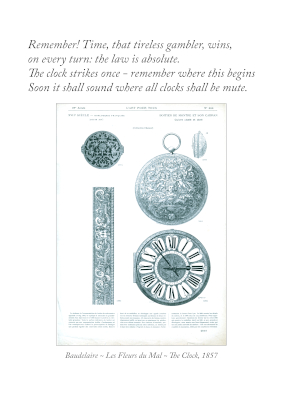
A literary art print pairing a passage from Charles Baudelaire’s Les Fleurs du mal with a richly detailed antique watch illustration. The verse reflects on time’s relentless passage, while the historical engraving brings an atmosphere of age, craftsmanship and quiet contemplation.
With its evocative imagery and vintage character, this print would sit beautifully in a study, library or reading nook. It also suits a dark academia-inspired interior, displayed alongside old books, vintage curiosities and classic artwork. A simple frame in black, brass or dark wood can complement the print’s antique feel, making it a thoughtful addition to a period home or creative space.
Remember! Time, that tireless gambler, wins
On every turn: the law is absolute.
The clock strikes once ~ remember where this begins
Soon it shall sound where all clocks shall be mute.
Baudelaire and the passage of time
Charles Baudelaire (1821–1867) was a French poet, translator and art critic. His best-known collection, Les Fleurs du mal (The Flowers of Evil), first appeared in 1857 and explores the complicated relationship between beauty and corruption, pleasure and suffering, spirituality and sin.
Baudelaire’s poetry is celebrated for its musical language, vivid imagery and symbolism. He found inspiration in modern urban life, turning familiar scenes into reflections on desire, boredom, decay and mortality. In Les Fleurs du mal, beauty can emerge from painful or unsettling experiences, a quality that helped make his work influential for later poets.
The passage featured here comes from “L’Horloge”, or “The Clock”. Its image of Time as a “tireless gambler” gives an abstract force a human character: a relentless player who never needs to cheat in order to win. The metaphor suggests the limits of human control, as the hours pass and life moves towards ageing, loss and death.
The antique pocket watch illustration
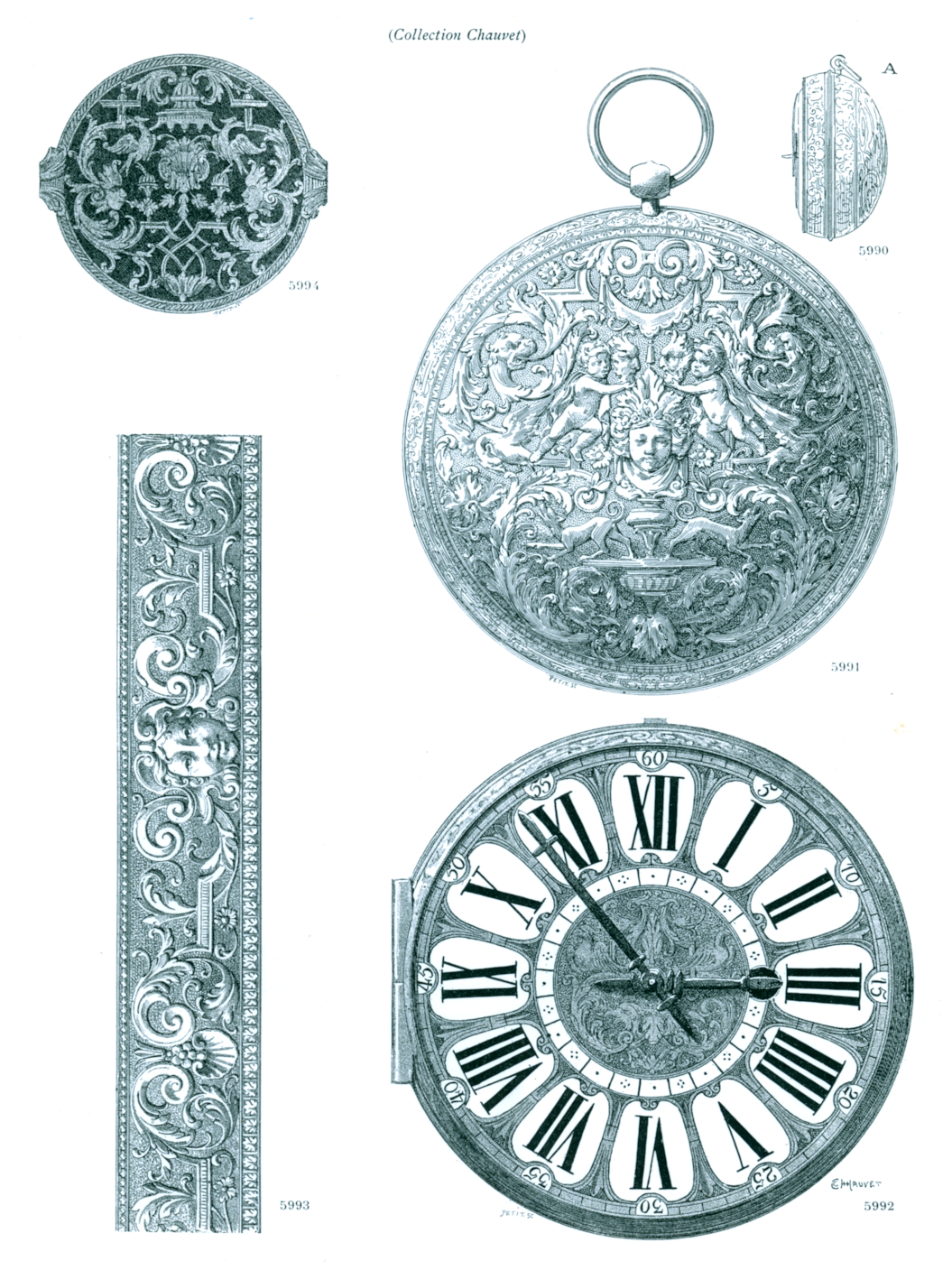
The watch engraving comes from an 1888 issue of L’Art pour tous. Founded in 1861, the publication aimed to make knowledge of art and design widely accessible, reproducing and explaining examples of historical ornament, decorative art and industrial design.
The illustration is identified as a chased gold watch case in the style of Louis XIV. Its ornate decoration suggests luxury, artistry and worldly pleasure, while the watch itself points to the passing of time. This contrast gives the image a contemplative, memento mori quality: a reminder that beauty and pleasure exist within the limits of a finite life.
A closer look at the watch engraving
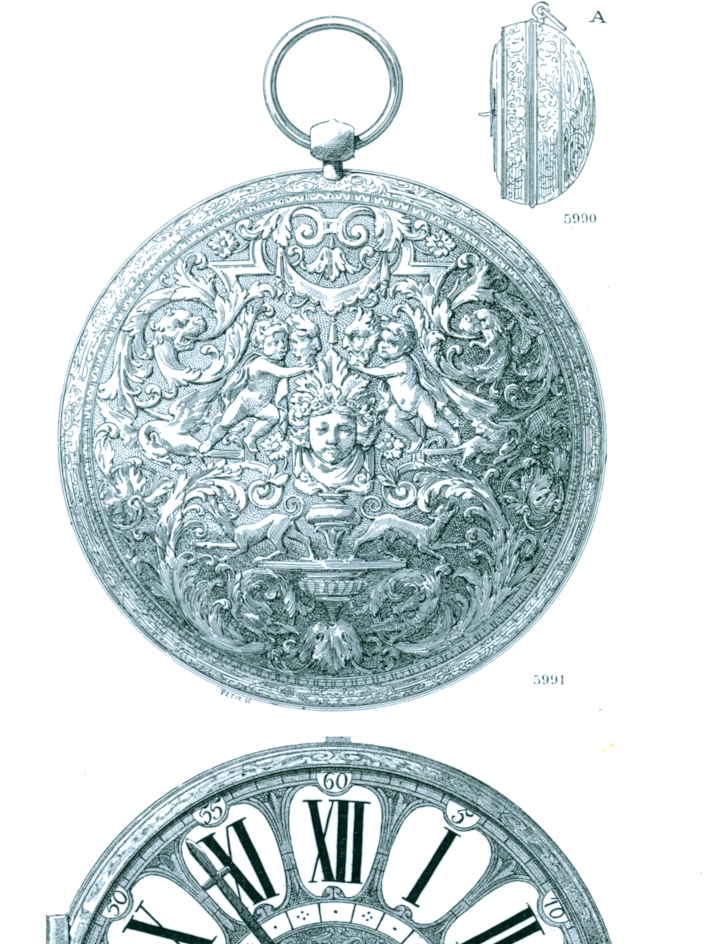
In the closer view, the engraving’s intricate details take centre stage: the elaborate case, the ornamental motifs and the carefully drawn dial. The watch is both a decorative object and an instrument for marking the hours, joining craftsmanship with the poem’s meditation on time.
Together, Baudelaire’s words and the historical illustration create an elegant, atmospheric composition. The poem considers time as an opponent that cannot be outplayed; the watch gives that idea a tangible form. The result is a reflective print for anyone drawn to poetry, antique design, history or dark academia style.
Literary wall art for a study, library or dark academia interior
Its quiet, antiquarian look makes this Baudelaire print at home in a study, library or reading nook, as well as in rooms with a traditional or period feel. It pairs especially well with Gothic, Victorian, Edwardian, classical, eclectic and dark-academia interiors. Display it alongside worn books, old clocks, brass accents or engraved curiosities for a subtle literary touch that lets the surrounding pieces shine.
A fitting choice for lovers of Baudelaire and Romantic-era writing, vintage timepieces, antique imagery and evocative objects, the print could also make a distinctive gift for a writer, poet, literature student or admirer of atmospheric interiors.
Print details
This is an unframed, made-to-order art print on thick matte paper.
Available sizes:
- A4: 210 × 297 mm
- A3: 297 × 420 mm
- A2: 420 × 592 mm
Paper details:
- Paper thickness: 10.3 mil
- Paper weight: 189 g/m²
- Opacity: 94%
- ISO brightness: 104%
- Paper sourced from Japan
Production and delivery:
Each print is produced to order, especially for you, to help ensure the best possible quality. It is professionally printed in the UK by a printing partner.
- Processing time: 2–5 working days
- Estimated UK delivery: 3–6 working days after processing
- Format: Unframed
- Packaging: Rolled and carefully protected to help prevent bending or damage
Please check the required size before ordering, as the product photographs may not be shown exactly to scale.
View the La Belle Dame sans Merci print
See the available sizes and order this John Keats poetry poster from the Etsy shop:
https://www.etsy.com/uk/listing/4571268363/baudelaire-art-les-fleurs-du-mal-vintage
Return to the Poetry Prints collection:
https://makermaking.co.uk/poetry-prints/index.php